

How Microsoft is Transforming Customer Support with AI
Omid Razavi
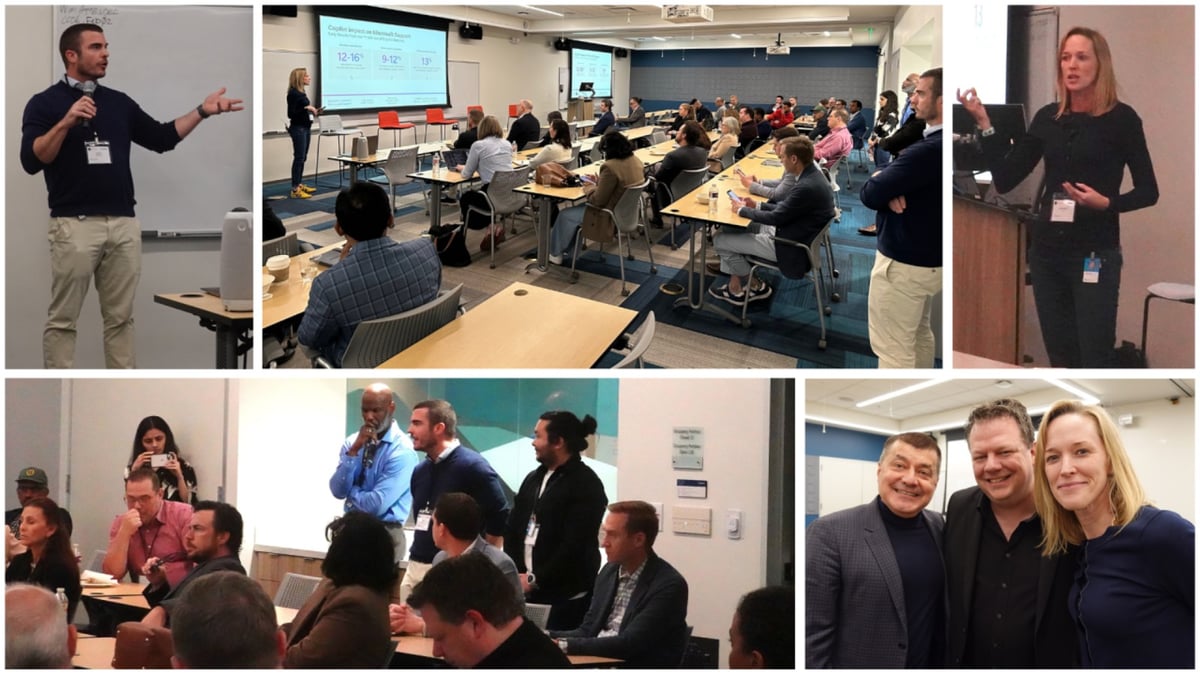
February 10, 2025At the CSS Executive Forum in Austin, Jennifer Lowry, Sr. Director, and her team from Microsoft Support's Customer Zero Program delivered a powerful keynote on how AI is fundamentally changing enterprise support. As an AI optimist and a builder of mission-critical customer experiences, Jennifer and her colleagues have led the rollout of Microsoft Copilot across their massive global support organization. With 45,000 support engineers handling 145 million cases annually in 47 languages, Microsoft’s Customer Service and Support (CSS) organization is at the forefront of AI-driven transformation.
Why Support is Leading AI Adoption
Jennifer highlighted a surprising shift—support is leading AI adoption ahead of other functions like sales, marketing, and customer success. This is because AI thrives on data, repeatable patterns, and efficiency, all core to customer support.
Support interactions generate vast amounts of structured and unstructured data, providing AI with the material it needs to learn and improve. Most customer issues have already been solved, making AI an ideal tool for retrieving previous solutions quickly. Additionally, support teams are constantly expected to do more with fewer resources, and AI helps improve efficiency while maintaining service quality.
The Three Pillars of Microsoft’s AI Strategy in Support
Jennifer outlined Microsoft’s AI approach around three key principles: eliminating repetitive tasks, accelerating agent proficiency, and improving access to information.
1. Reducing Repetitive Work
Microsoft focused on reducing "agent toil"—the repetitive, manual work that consumes time but adds little value. Tasks like writing emails, summarizing cases, and searching for past solutions are now automated with AI, allowing agents to focus on problem-solving. Jennifer shared an example of a highly skilled engineer who struggled with writing emails. AI now drafts professional, clear responses for him, ensuring consistency while allowing him to concentrate on troubleshooting complex issues.
2. Helping Agents Become Proficient Faster
Onboarding new support engineers has traditionally taken months due to the vast amount of knowledge they need to absorb. AI has dramatically shortened this learning curve by providing real-time, context-aware answers, helping agents become effective faster.
Jennifer explained how handling a first set of cases is often nerve-wracking for new hires. With AI acting as an assistant, agents no longer have to guess their way through interactions, reducing the time required to reach proficiency.
3. Providing Instant Access to Information
Microsoft supports over 70 services, spanning Windows, Azure, Xbox, and complex enterprise solutions. AI helps by retrieving relevant, real-time answers across different product areas. During major transitions like the move from Windows 10 to Windows 11, AI ensured engineers had access to up-to-date knowledge, significantly improving efficiency and resolution times.
Measurable Impact of AI on CSS
Jennifer’s colleague, Alonzo Milow, Microsoft’s Technical Director of Innovation, shared the following data:
- Case resolution times improved by 12–16%.
- Agent capacity increased by 9–12%, enabling more cases to be handled without adding headcount.
- Empathy scores in emails rose by 40%, improving customer satisfaction and making interactions more human.
Jennifer noted how AI has even reduced the emotional burden on support engineers, especially during high-stress cases. AI-generated responses allow agents to focus on solving technical issues while ensuring appropriate tone and empathy.
Lessons Learned: Overcoming AI Adoption Challenges
Refining AI Training Data
Initially, Microsoft fed its entire internal knowledge base into the AI, assuming more data would improve results. Instead, redundant or outdated information created noise and reduced accuracy. The team refined and structured data sources to ensure relevant, high-quality answers.
Managing Change and Building AI Adoption Champions
AI is a disruptive technology, and not everyone welcomes change. Jennifer, along with colleagues John Mitchelson, Director of Enhanced Offers, and Jasuwha Choi, Sr. AI Strategist and Program Manager, built a network of internal AI adoption champions—experienced agents who tested new tools, provided feedback, and guided their peers through the transition.
Jennifer stressed the importance of strong feedback loops and actively engaging support engineers to drive AI adoption. Early feedback was often unhelpful, so they trained engineers to give better, actionable input, making submitting feedback directly within the tool easy. Crucially, acting on that feedback built trust and sustained engagement.
To reinforce adoption, they launched Spark Weeks—hands-on events at support sites where frontline engineers led sessions to share best practices, real-world success stories, and lessons learned. These sessions fostered peer learning, collaboration, and practical knowledge-sharing, creating a stronger sense of community and encouraging broader adoption.
Their team achieved stronger buy-in and greater success with AI implementation by making adoption a grassroots effort rather than a corporate directive.
How AI is Making Support More Human
One of the most unexpected benefits has been in communication. AI-assisted responses have helped agents craft clearer, more customer-friendly messages, leading to stronger customer satisfaction and more meaningful interactions.
AI-crafted responses also help non-native speakers communicate more clearly and maintain the right tone and empathy in emotionally charged cases. Jennifer found it profound that a piece of technology was helping engineers bring more humanity to their work.
The Future of AI in Microsoft Support
Jennifer and her team see personalization, automation, and AI-powered knowledge sharing as the next frontier for AI in support. Alonzo’s team even gamified adoption by hosting internal competitions to encourage engineers to become the best AI prompters.
Final Takeaways
Jennifer’s closing message was clear: "AI isn’t here to replace support teams—it’s here to empower them." She encouraged Customer Service and Support leaders to act quickly, test AI solutions, and focus on building trust with their teams. Her parting words left a lasting impression: “AI is not just about efficiency—it’s about giving support teams the tools they’ve always deserved. And honestly? It’s about time.”
Event Highlights & Staying Connected
The Customer Service and Support (CSS) Executive Forum took place on January 30, 2025, at the Microsoft Campus in Austin, Texas, bringing together 70+ CSS leaders from the Austin metropolitan area.
Stay connected about future CSS forums in your area and continue the conversation:
- Join the CSS Communities on LinkedIn ⬅️
- Subscribe to CCO Perspectives for exclusive insights and updates ⬅️
Like
Comments (0)
Popular

Dive in
Related
Blog
Transforming Customer Success and Support with AI: Highlights from the CSS Executive Forum - Chicago
Nov 18th, 2024 • Views 1
Blog
Scaling Success: How Salesforce is Transforming Customer Support with Empathy and AI
Sep 24th, 2024 • Views 1
Blog
Scaling Success: How Salesforce is Transforming Customer Support with Empathy and AI
Sep 24th, 2024 • Views 1
Blog
Transforming Customer Success and Support with AI: Highlights from the CSS Executive Forum - Chicago
Nov 18th, 2024 • Views 1