

AI Strategy & Technology
September 14, 2026
Nine Assumptions Customer Leaders Should Challenge About Enterprise AI

# Enterprise AI
# Operating Models
# Customer Value
A stronger definition of progress, grounded in what customers achieve.

Omid Razavi
Enterprise AI needs a more demanding definition of progress.
AI can improve individual tasks and still leave the customer worse off.
Faster tasks and lower costs are a start. Lasting value depends on how leaders assign authority, organize work, and measure what customers actually achieve.
Nine assumptions worth challenging, from SuccessLab forums, roundtables, and conversations with enterprise leaders.
1. Assumption: “Better models justify greater autonomy.”
Greater capability alone does not justify broader authority to act. The same configuration change can be appropriate during normal operations and dangerous during an outage.
Define what AI may do, under which conditions, and when it must escalate. Expand its authority based on demonstrated results, with clear triggers to narrow or withdraw it.
2. Assumption: "Cheaper intelligence means better economics."
Support closes cases faster, but customers repeat troubleshooting and account teams repair the relationship. One team’s savings become someone else’s work.
Measure the full cost of reaching the customer’s outcome. A lower cost per case tells you little if resolving the problem takes three cases.
3. Assumption: “Access to enterprise knowledge makes AI ready to act.”
An agent retrieves two conflicting policies. Both look authoritative. Accurate retrieval does not establish which one should govern the decision.
Establish which knowledge governs each decision, who owns it, and how to resolve conflicts.
4. Assumption: “Removing routine work elevates people.”
When AI handles the straightforward cases, people face a higher concentration of ambiguity, conflict, and difficult decisions. Fewer cases can demand more judgment.
Adjust staffing, workloads, and performance expectations to match that complexity. Give people the time, training, and support the remaining work requires.
5. Assumption: “Trust follows from consistency and guardrails.”
An agent can follow every rule and still leave the customer's problem unresolved. A password reset can succeed while the customer still cannot sign in. Customers base trust on results.
Verify that the customer achieved the intended outcome. The higher the stakes, the stronger the evidence should be.
6. Assumption: “Well-governed agents produce a well-governed enterprise.”
A sales agent promises dedicated onboarding. A customer success agent assigns self-service based on contract value. Each follows its rules. The customer gets less than promised.
Make someone accountable for the full customer journey, with authority to resolve conflicts across teams and agents.
Enterprise AI needs a more demanding definition of progress. Judge it by what the customer achieves and what it takes to get there.
Which of your AI metrics is improving while the customer experience isn't?
AI can resolve the issue and leave the cause untouched.
Faster resolutions are a start. Lasting value comes when leaders use what AI reveals to eliminate unnecessary work, reduce customer friction, and prevent the same problems from recurring.
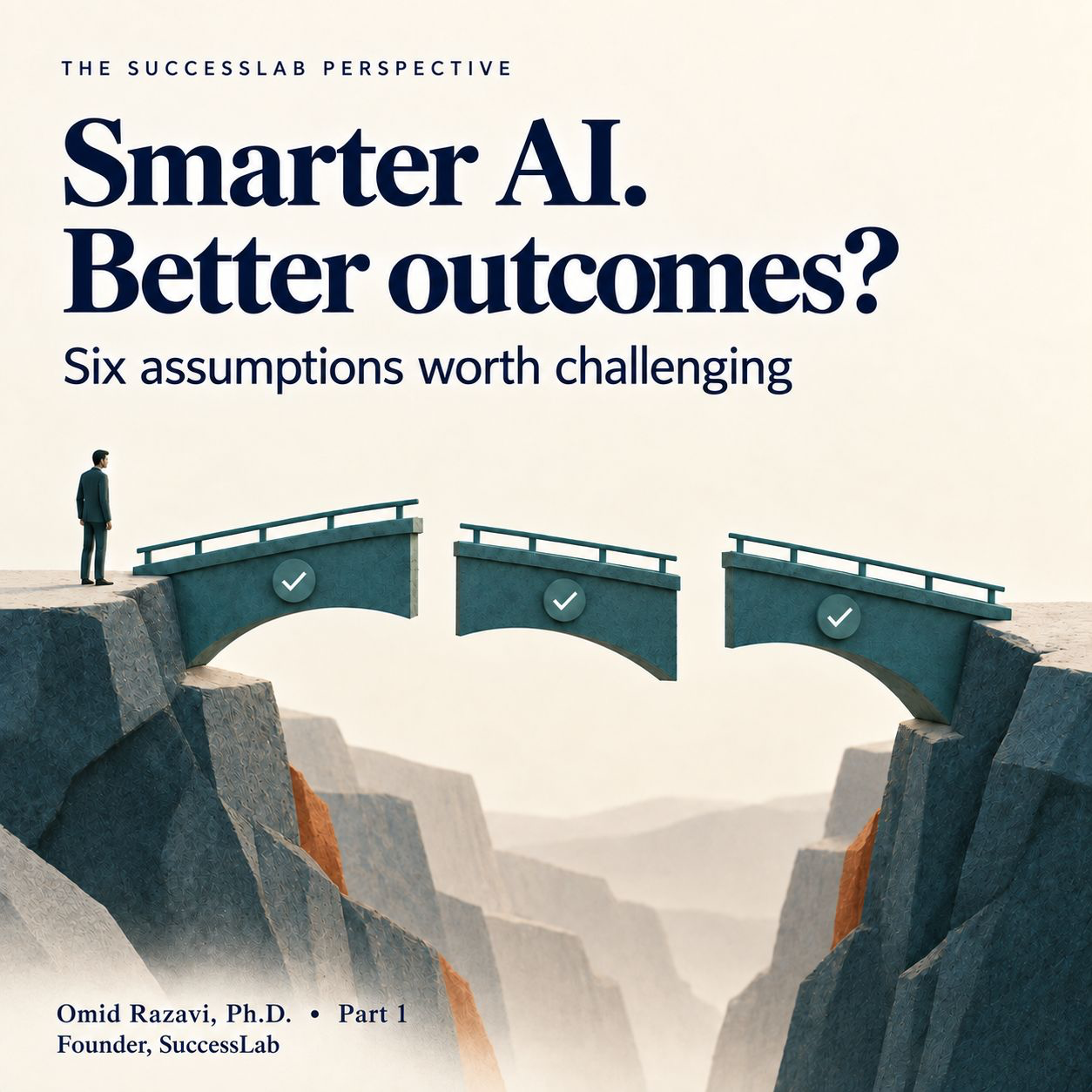
Assumptions worth challenging, Part 1. Source: Omid Razavi / SuccessLab.
7. Assumption: “Work worth doing today is worth automating tomorrow.”
A workflow can outlast the constraints that made it necessary.
An AI agent can speed up an approval that a clearer policy would eliminate. It can coordinate a handoff that shared information would make unnecessary.
Before automating the work, ask whether it still needs to exist. Give process owners the authority to remove unnecessary steps and change the policies and practices that keep creating them.
The goal should be fewer obstacles between the customer and the outcome they need.
8. Assumption: “Fewer interactions mean a better customer experience.”
A customer who stops contacting you may have solved the problem. They may also have given up. Contact volume alone cannot tell you which.
At a recent SuccessLab roundtable, one leader said she is allergic to the word deflection. She does not want to be deflected, and neither do her customers.
Measure whether customers achieve their goals, where they get stuck, and whether they can reach help when they need it.
As AI handles more conversations, make recurring questions, failed attempts, and requests for human help visible to the people responsible for products, policies, and customer relationships.
A quieter support queue can hide the friction customers still face.
9. Assumption: “Better models make the organization smarter.”
A model can improve while the organization keeps repeating the same mistakes.
An agent corrects a billing error. The case closes. The next customer receives an invoice with the same error.
Assign a named owner, with authority outside support, to turn customer feedback, employee corrections, and recurring failures into changes to policies, products, and workflows. Then verify that fewer customers encounter the same problem.
AI's value compounds when solving one customer's problem helps prevent the same problem for others.
What has your organization changed because of what AI revealed?
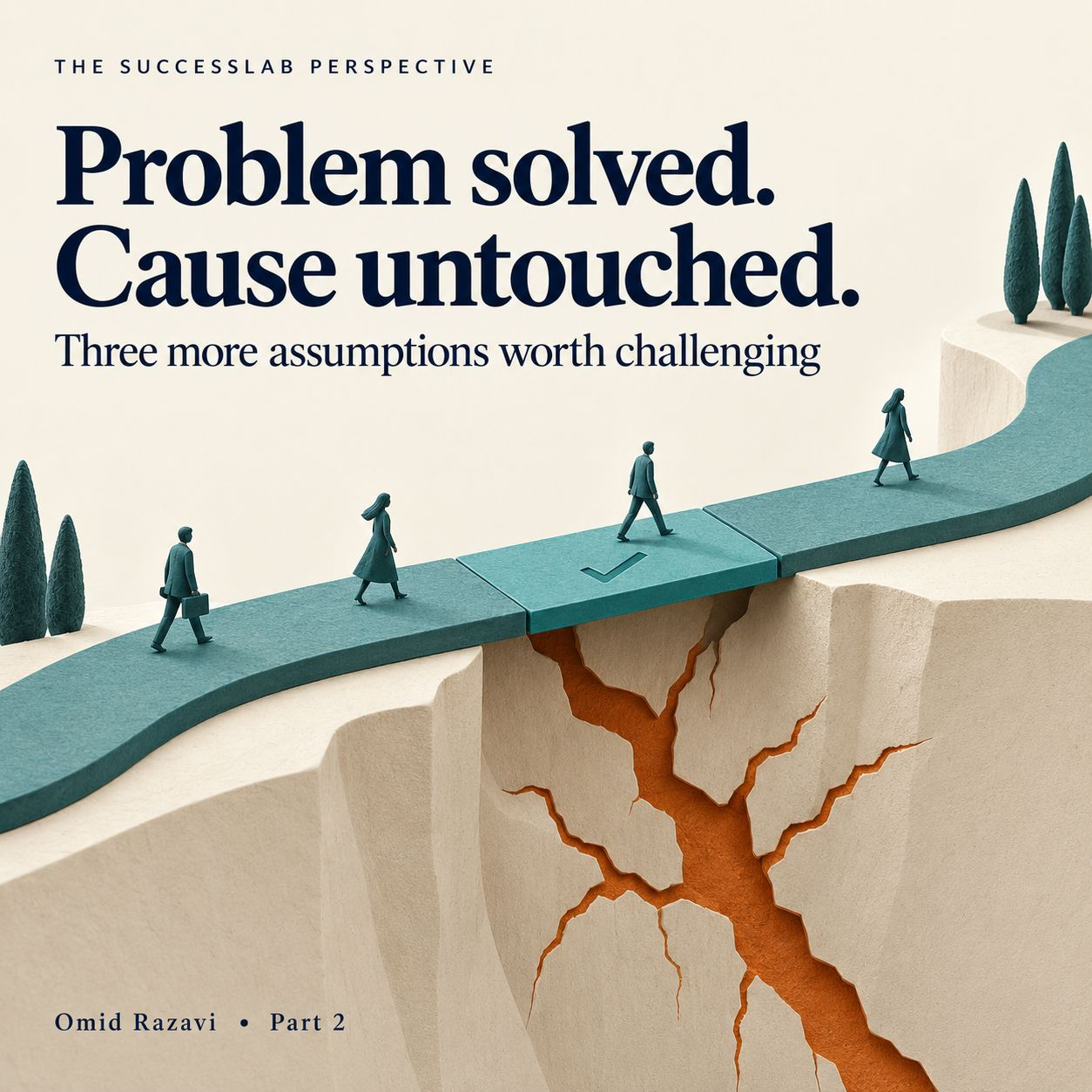
Assumptions worth challenging, Part 2. Source: Omid Razavi / SuccessLab.
Original publications
Comments (0)
Popular

Dive in
Related
Blog
Enterprise AI for Customer Leaders: From Architecture to Applications
By Omid Razavi • Oct 19th, 2026 • Views 7
Blog
CSS Executive Forum Raleigh (RTP): Where Customer Leaders Are Building the AI-Enabled Future
By Omid Razavi • Oct 20th, 2025 • Views 19
Blog
From Pilots to Transformation: What Leaders in London Revealed About AI in Customer Service
Nov 22nd, 2025 • Views 9
Blog
Enterprise AI for Customer Leaders: From Architecture to Applications
By Omid Razavi • Oct 19th, 2026 • Views 7
Blog
From Pilots to Transformation: What Leaders in London Revealed About AI in Customer Service
Nov 22nd, 2025 • Views 9
Blog
CSS Executive Forum Raleigh (RTP): Where Customer Leaders Are Building the AI-Enabled Future
By Omid Razavi • Oct 20th, 2025 • Views 19