

Inside ServiceNow: Rohit Batra on the Future of Connected Service, Sales, and Success
# ServiceNow
# Connected Service
# CS
AI-Powered Customer Experience and Operational Excellence
November 17, 2025By Omid Razavi, Founder, SuccessLab
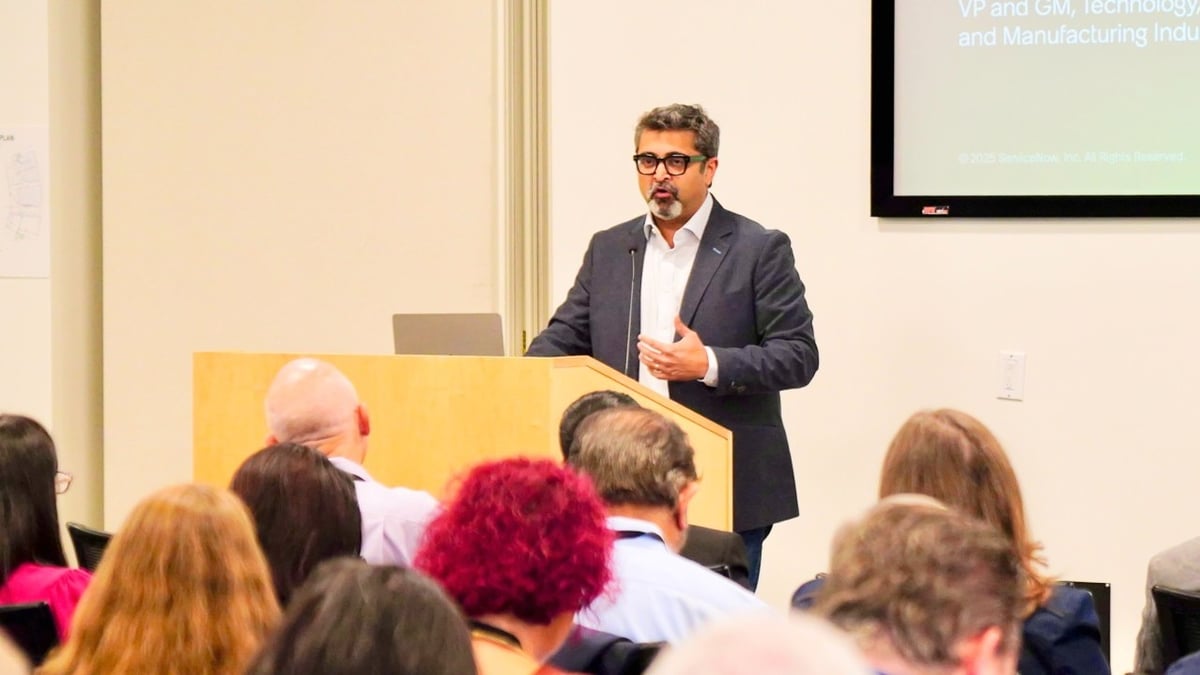
When Rohit Batra, General Manager and Vice President for Manufacturing, Telecommunications, Media & Technology at ServiceNow, joined us on stage at the CSS Executive Forum – Silicon Valley, the room was filled with CX, Support, Success, and Digital leaders eager to hear how one of the fastest-growing enterprise platforms is reshaping the customer experience with AI.
Rohit has spent the past five years leading one of ServiceNow’s most dynamic product portfolios, and as he put it, “the last twelve months have seen more change than the previous five years combined.”
From IT Service Management to Enterprise Experience
Rohit began by revisiting ServiceNow’s origins. More than two decades ago, founder Fred Luddy set out to build a platform—long before “platform” was common vocabulary in enterprise software. Early investors didn’t fully grasp the concept, but they understood the potential for impact.
What started as IT Service Management (ITSM) has since evolved into a powerful workflow engine that unifies IT, HR, customer operations, and employee experiences under a single architecture.
Roughly a decade ago, ServiceNow expanded into Customer Service Management (CSM). Today, that business is over $1.5B, the company's fastest-growing line.
“Our DNA has always been customer-focused,” Rohit shared. “We realized that every interaction, not just onboarding or resolution, defines value and retention.”
The Shift from Growth to Retention
Enterprises everywhere are shifting priorities. “It’s no longer about how many customers you win,” Rohit explained, “but how many you keep and how much value they realize.”
This shift has elevated retention, adoption, and time-to-value to board-level conversations. Customer experience is no longer a series of touchpoints — it’s an interconnected value flow.
This perspective led ServiceNow to unify Sales, Service, and Success on one data and workflow layer, enabling companies to connect opportunity, delivery, and ongoing value.
One Platform, End-to-End Value
ServiceNow’s verticalization strategy is accelerating outcomes in industries with complex, asset-heavy operating models — telecom, utilities, and manufacturing. In these industries, Field Service, Customer Success, and Support aren’t separate motions; they are interdependent. With all data flowing across a single platform — opportunities, quotes, orders, assets, tickets, and success plans organizations can execute with real-time visibility.
“The goal,” Rohit said, “is not to add more layers of integration; it is to eliminate them.”
ServiceNow’s recent CPQ acquisition amplifies that advantage by consolidating sales experience, quoting, and fulfillment into a single stack.
The AI-Driven Support Revolution — Powered by Now Assist
AI and automation are now deeply woven into ServiceNow’s product and operating model. Now Assist, ServiceNow’s generative AI engine built natively into the platform, brings to life:
- Case summarization reduces handle time and improves accuracy for support engineers.
- Knowledge articles can be automatically generated from resolved cases and tribal knowledge.
- Virtual agents and AI copilots guide both customers and support engineers through complex resolutions.
“AI isn’t just assisting our people; it’s learning from them,” Rohit said. “With Now Assist, every case solved makes the system smarter for the next customer.”
Competing Differently — From the Core Outward
When asked how ServiceNow differentiates itself from competitors like Salesforce, Rohit pointed to architecture and lineage.
“Salesforce grew from CRM outward; we grew from IT and operations upward. We understand the service architecture, the relationships between assets, applications, and customers, and that gives us a unique ability to connect the dots from the inside out.”
At the heart of that distinction is ServiceNow’s Configuration Management Database (CMDB), the backbone that maps every asset, service, and dependency. It enables organizations to understand not only what went wrong but who is affected, creating the foundation for proactive, predictive support.

The Road Ahead
Looking ahead, Rohit emphasized connected intelligence — a future where service, success, and sales operate as one unified system of engagement and record.
“We’re moving from workflows to value flows, where every team, every system, and every interaction contributes to one shared outcome: customer success.”
That future won’t be defined by simply adding more tools, but by better orchestration—bringing together human expertise, data, and AI in purposeful, coordinated ways.
Personal Reflections from the Forum
Hosting Rohit and the ServiceNow team on their Silicon Valley campus truly felt like coming home.
I joined ServiceNow from SAP Cloud, after a brief stint at TSIA’s Outcome Chains, to create and lead the Product Success function for Customer Service Management (CSM). Our mission was simple to articulate but transformational in practice: understand the customer service and support ecosystem at its operational core.
We spent time on-site with customers—shadowing support engineers during live calls, chats, and case lookups, joining incident review bridges and triage huddles, and observing dispatchers and field service technicians to experience the last mile of service delivery firsthand. I was always struck by the precision and multitasking mastery of support engineers, juggling multiple customer interactions across a dozen applications, filling every pixel of their desktop workspace. Supporting both the CSM and FSM product lines, we partnered with Product Management, Engineering, and delivery teams to ensure customer workflows, service insights, and operational feedback were reflected in every release.
Our earliest adopters were ITSM customers stretching the platform for customer service use cases. Their requirements became the foundation of the CSM product. To deepen collaboration, we launched Product Advisory Council (PAC) for CSM—a group of pioneering customer leaders who guided product direction, provided candid feedback, and took the stage at Knowledge and industry events. These relationships not only influenced the product but also reinforced the co-creation culture that continues to define ServiceNow.

ServiceNow CSM Product Advisory Council - group photo from our casino-themed strategy and feedback session at Knowledge 2019 conference.
During my tenure, CSM grew from roughly $20M to more than $250M in just over three years — driven initially by customers moving off customized ITSM deployments and into a purpose-built platform. As CSM matured, organizations embraced its scalability and value, and our team’s relentless focus on customer outcomes accelerated the product’s rapid rise.
In late 2019, I left and joined SupportLogic as CCO to drive AI-first transformation in customer service and support, helping organizations predict sentiment, prevent escalations, and automate insights across platforms including Salesforce, Zendesk, ServiceNow, and Microsoft Dynamics.
As our customer base expanded, one of my proudest achievements was launching the Customer Advisory Board, a partnership model among industry leaders that later became the blueprint for SuccessLab's CSS Advisory Board.
Today, the CSS Advisory Board brings together senior leaders to advance innovation in AI, operating models, and value frameworks — elevating customer experience, strengthening service organizations, and driving measurable business outcomes.

CSS Advisory Board by SuccessLab - October 29, 2025
Returning to the ServiceNow campus for this CSS Executive Forum, surrounded by familiar faces and new leaders, was a moment of genuine pride. Seeing the company’s continued momentum and its leadership in AI, now a $1.5B+ business in customer service alone, reaffirms reaffirmed what has always set ServiceNow apart: a relentless commitment to customers, innovation, and continuous learning.
A heartfelt thank-you to Brian Lomeli, Terence Chesire, and John Ball for their partnership and generosity in hosting us. Their support made this gathering not only possible but truly memorable. As Rohit reminded us, the future of service won’t just be automated; it will be intelligent, empathetic, and deeply connected.
I’m especially excited to collaborate with Brian Lomeli — a founding member of our CSS Advisory Board — and his Customer Service and Support organization to showcase their success as customer zero for their AI and CSS innovations in future forums and community conversations.
The CSS Executive Forum – Silicon Valley is part of SuccessLab’s global series connecting leaders in Customer Service, Support, and Success. Learn more at successlab.us.
I invite you to join our growing community at community.successlab.us — a space for Customer Success, Service, and Support leaders to exchange ideas, share best practices, and shape the future of our profession together.
You can also subscribe to our CCO Perspective Newsletter for insights, interviews, and event highlights from leading voices in the CSS community.
Comments (0)
Popular

Dive in