

From Pilots to Transformation: What Leaders in London Revealed About AI in Customer Service
# CSS
AI-Infused Customer Journeys from Conversations to Outcomes
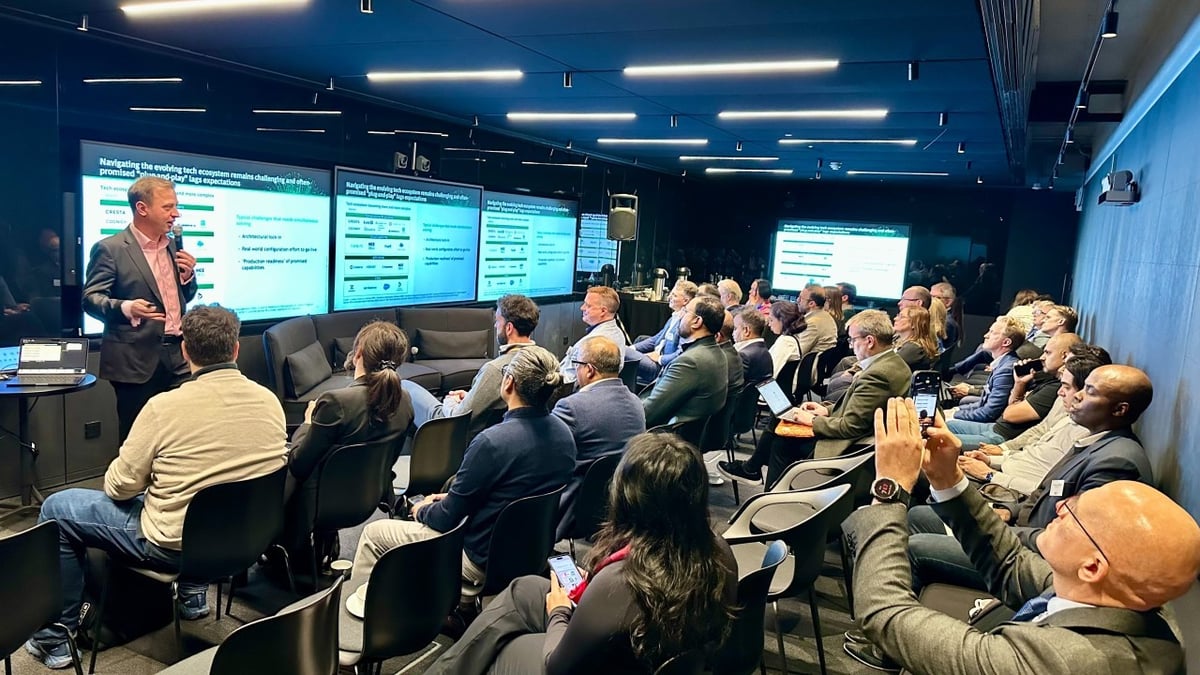
November 22, 2025Earlier this week in London, we hosted the AI-Infused Customer Journeys: From Conversations to Outcomes executive roundtable with Boston Consulting Group. The discussion was practical, direct, and reflective of what many leaders in our CSS community have been working through this year.
I opened the session by sharing themes emerging from our recent CSS Executive Forums and Advisory Board meetings. Across sectors, leaders are trying to understand how to introduce AI in a way that avoids unnecessary friction, aligns with real business needs, and delivers outcomes that matter.
This set the stage for Stuart McCann of BCG, who shared a pragmatic view of where organizations are today and what it will take to move forward. His message resonated strongly with the room.
A Clearer Picture of the AI Landscape
Stuart noted that many organizations are still wrestling with the basics of AI adoption, especially how to choose an architecture that avoids lock-in and can operate reliably in real production environments. Leaders want clarity on how these systems will integrate across channels, data sources, and legacy platforms, not just how they perform in controlled demos.
BCG is now seeing clients ask for an “AI recovery plan” to course-correct early investments that produced limited value. The issue was rarely the model itself. Most pilots failed because teams were not aligned on the problem, the outcome, or the required operating changes.
Stuart’s guidance was straightforward. Companies cannot automate broken processes. Before scaling AI, they must fix workflows, strengthen data and API foundations, and rewrite large parts of their knowledge base. It is unglamorous work, but unavoidable.
He emphasized that AI transformation is primarily a people challenge. Technology is about 30 percent of the effort. The rest is upskilling teams, aligning functions, redefining roles, and managing change.
Organizations that achieved real P&L impact shared common traits: the transformation was business-led, value was defined upfront, tech and data layers were built intentionally, and build-versus-buy decisions were made with discipline. They also designed for a future end-to-end experience rather than automating the current one.
Looking ahead, Stuart highlighted a new wave of capabilities: AI agents with memory, small and real-world models, large-action models that automate desktop tasks, and agentic systems that can observe, plan, and act. The next phase is not channel optimization but full process reimagination.
He outlined four areas that will shape the future of customer service: AI copilots for agents, virtual agents that handle routine demand, agentic workflows that remove steps entirely, and AI-powered insights that provide real-time intelligence.
His closing point was cautionary. Technology is moving faster than most organizations can adapt. Leaders will need to rethink processes from the ground up, invest in strong foundations, and learn quickly to avoid repeating early mistakes.

This led naturally into the fireside chat with John Sabino, CEO of LivePerson. I will share the takeaways from that session in a separate post.
What Our Panel Added: Lessons from the Field
Following Stuart’s framing, our panel brought real-world depth across financial services, hospitality, telecom, and enterprise SaaS.
The panel featured:
- Nathan Pearson, PolyAI, formerly leading Conversational Banking at HSBC
- Stela Koleva, VP of CX and Product Support at Mews
- Kevin Meeks, Chief Customer Officer at LivePerson
- Dr. Lawrence Ampofo, AI and Digital Transformation, Vodafone
Under the Chatham House rule, here are the combined patterns and lessons they surfaced.

AI Arrives When Traditional Approaches Break
Across organizations, AI adoption began not with strategy decks but with operational strain:
- Agents unable to access the information they need quickly
- Backlogs expanding after mergers and acquisitions
- Global contact centers struggling to deliver consistent experiences
- Organizations shifting operational focus toward customer experience
AI was introduced to restore capacity, reduce friction, and deliver the experience customers expect.
Pilots Work Only When They Build Trust
Pilots were essential, but only when designed carefully:
- Start with small but meaningful use cases
- Limit pilots to maintain focus and avoid change fatigue
- Use agent-facing copilots to build early confidence
- Scale only when frontline teams trust the outputs
Pilots succeed when they test belief, not just technology.
Cross-Functional Alignment Is the Real Accelerator
AI moved faster when functions moved together:
- Risk and compliance
- Finance
- IT and product
- Operations and customer teams
Programs that remained siloed rarely progressed beyond pilots. Successful efforts treated AI as a business transformation, not a tech rollout.
You Cannot Automate a Broken Process
AI surfaced broken foundations immediately:
- Outdated knowledge
- Scattered data
- Manual handoffs
- Fragile integrations
Teams that invested in fixing these early saw significantly stronger results later.
Change Management Drives Adoption
The most successful organizations treated AI adoption as a people journey:
- Trust-building with agents
- Training in real workflows
- Clear communication about purpose and benefits
- Redefined roles as AI absorbed routine work
Employee confidence proved to be one of the strongest predictors of scale.
Metrics Are Shifting Toward Resolution and Effort
Leaders are moving beyond containment and handling time. They now measure:
- True resolution
- Customer effort and emotion
- Agent capability
- Whether customers escalated after the AI interaction
- Improvement over legacy flows
Generative insights are helping teams analyze entire conversation logs to understand where journeys break.
Play to Human Strengths and AI Strengths
The panel highlighted that AI and humans excel at different things. AI thrives on context, retrieval, and repeatability. Humans thrive on judgment, nuance, and complex situations.
Real data challenged assumptions about emotional journeys. In some instances, such as bereavement, customers preferred a thoughtful virtual agent because it reduced emotional strain.
Respect Customer Habits When Introducing AI
Leaders advised against retiring familiar interfaces too quickly. Good practices included:
- Coexistence of classic and AI experiences
- A/B testing
- Clear superiority in the new experience before removal
- Proactively help when customers get stuck
Transitions require respect for user behavior and preference.
Meet Customers Where They Are
Customers vary in comfort and skill. Behavioral analytics is essential:
- Where they exit AI flows
- Why they leave
- Whether they solve their issue
- Which intents fail repeatedly
This allows organizations to tailor experiences without relying on assumptions.
Closing Reflection
The energy carried into the networking drinks and dinner, where the group settled into easy, open conversation. There was a genuine connection and a sense of community as leaders compared experiences and explored what lies ahead. The collective conclusion: AI is accelerating customer expectations and reshaping journeys much faster than most organizations can redesign their operating models.

The leaders who will succeed are those who stay grounded in real behavior, build alignment early, fix the foundations before scaling, and invest deeply in people. They will design journeys that combine human and AI strengths to deliver better outcomes.
This London forum reminded us that AI progress is not defined by how much you deploy. It is defined by how well it works for customers and employees.
Comments (0)
Popular

Dive in
Related
Blog
John Sabino at the CSS Executive Forum London: A Blueprint for Responsible, Customer-First AI
Nov 24th, 2025 • Views 13
Blog
John Sabino at the CSS Executive Forum London: A Blueprint for Responsible, Customer-First AI
Nov 24th, 2025 • Views 13